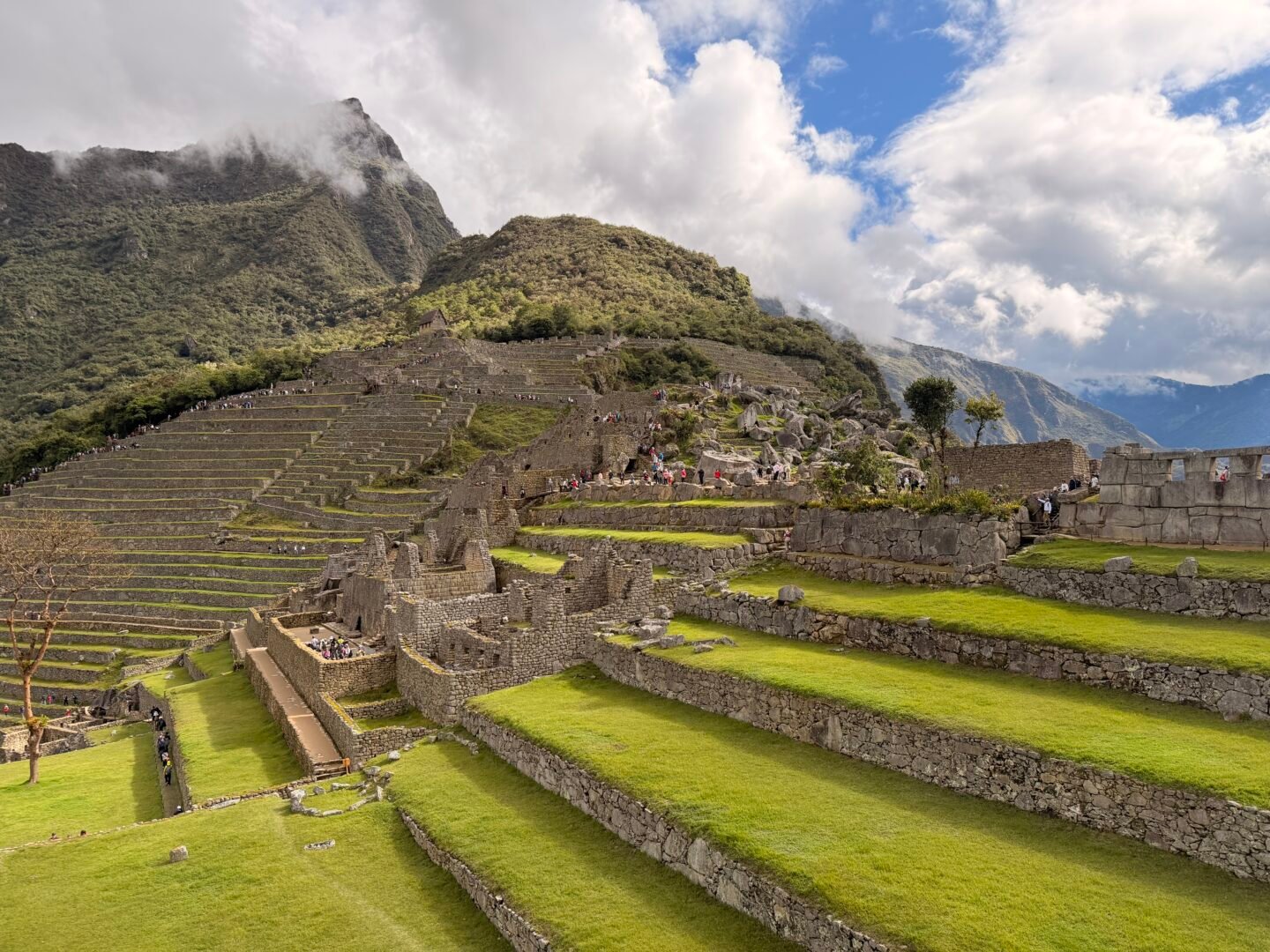
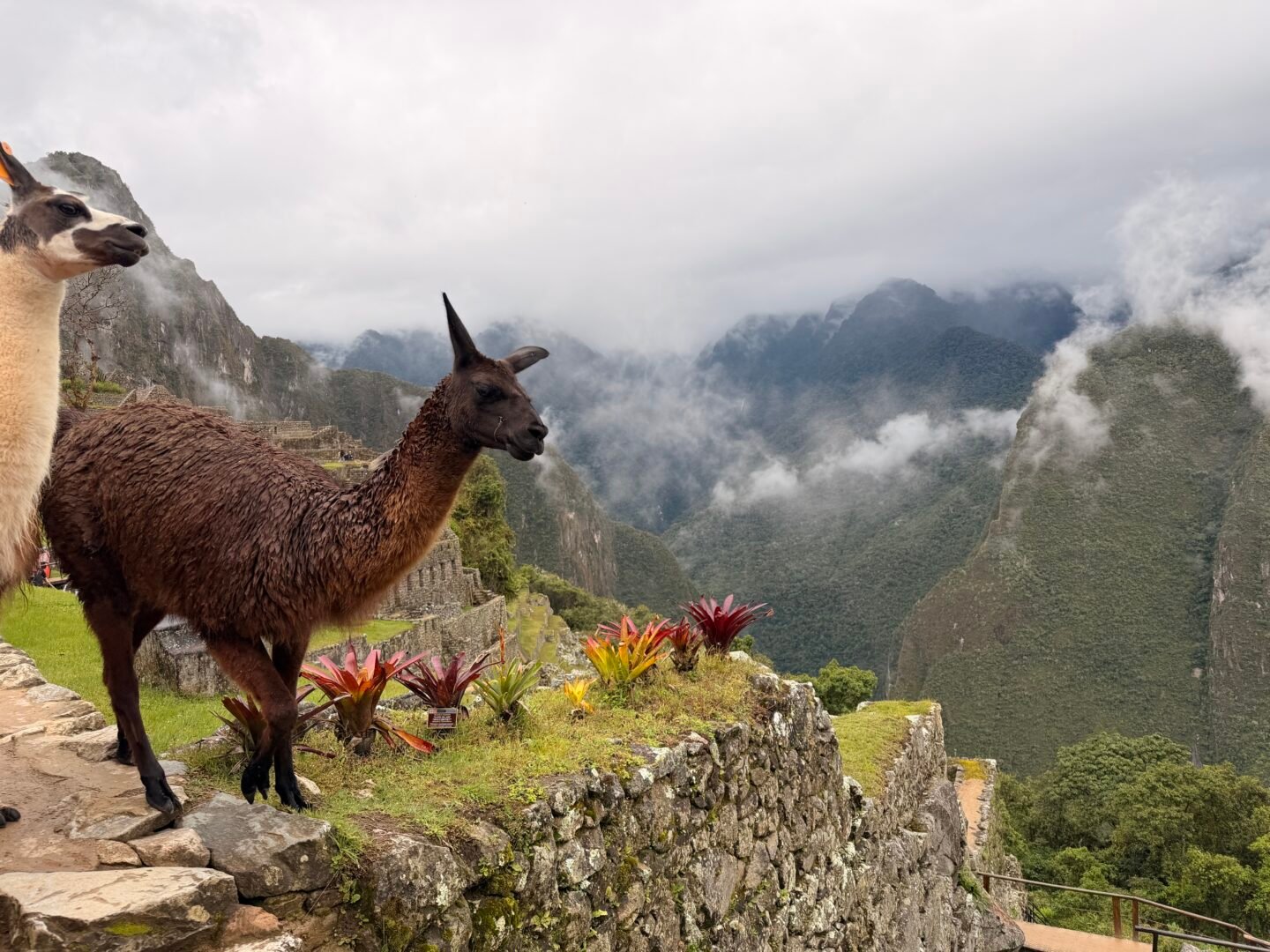
Visiting Machu Picchu during the rainy season is a memorable adventure—with some major perks and a few minor drawbacks. If you’re willing to embrace unpredictable weather, you’ll be rewarded with fewer crowds, moodier landscapes, and a version of Machu Picchu that feels even more mystical than the postcard photos.
I visited Machu Picchu during Peru’s rainy season, dealt with hours of showers, muddy terrain, a literal train crash that left us stranded in Aguas Calientes, and somehow still walked away thinking: yes, it’s absolutely worth it—if you come prepared.
Here’s everything you need to know about visiting Machu Picchu in the rainy season, including weather by month, how to get there, which circuits to book, what to wear, what to pack, and how to avoid disappointment.
What Is Machu Picchu?
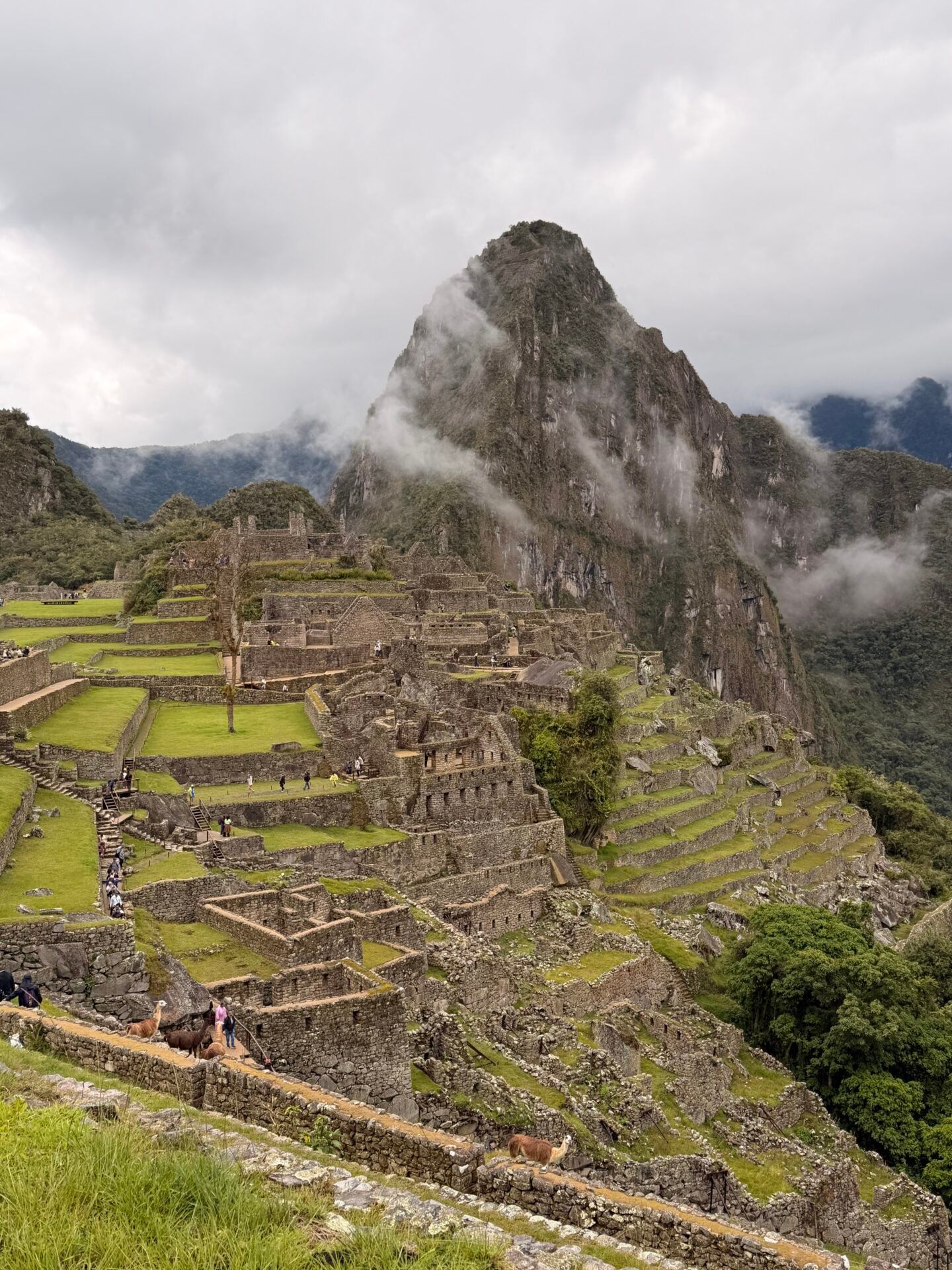
Machu Picchu is one of the New Seven Wonders of the World, sitting at 7,970 feet high in Peru’s Andes Mountains, a few hours from Cusco. Built in the 15th century, this Incan citadel is often called the “Lost City of the Incas.”
While local villagers always knew of its existence, Machu Picchu was abandoned in the mid-1500s—likely due to disease or political collapse—and remained largely untouched until American explorer Hiram Bingham brought it to international attention in 1911.
Spanish conquistadors notoriously destroyed and dismantled many Incan temples and structures in an effort to erase Incan religion, culture, and identity—often building colonial churches directly on top of sacred sites. Because of its remote location, Machu Picchu was never discovered by the Spanish during their conquest, allowing it to remain one of the most remarkably well-preserved examples of an Incan settlement.
Today, over a million and half tourists visit Machu Picchu each year. That works out to roughly 4,000–5,600 visitors per day, depending on the season and visitor caps set by Peru’s Ministry of Culture to preserve the site.
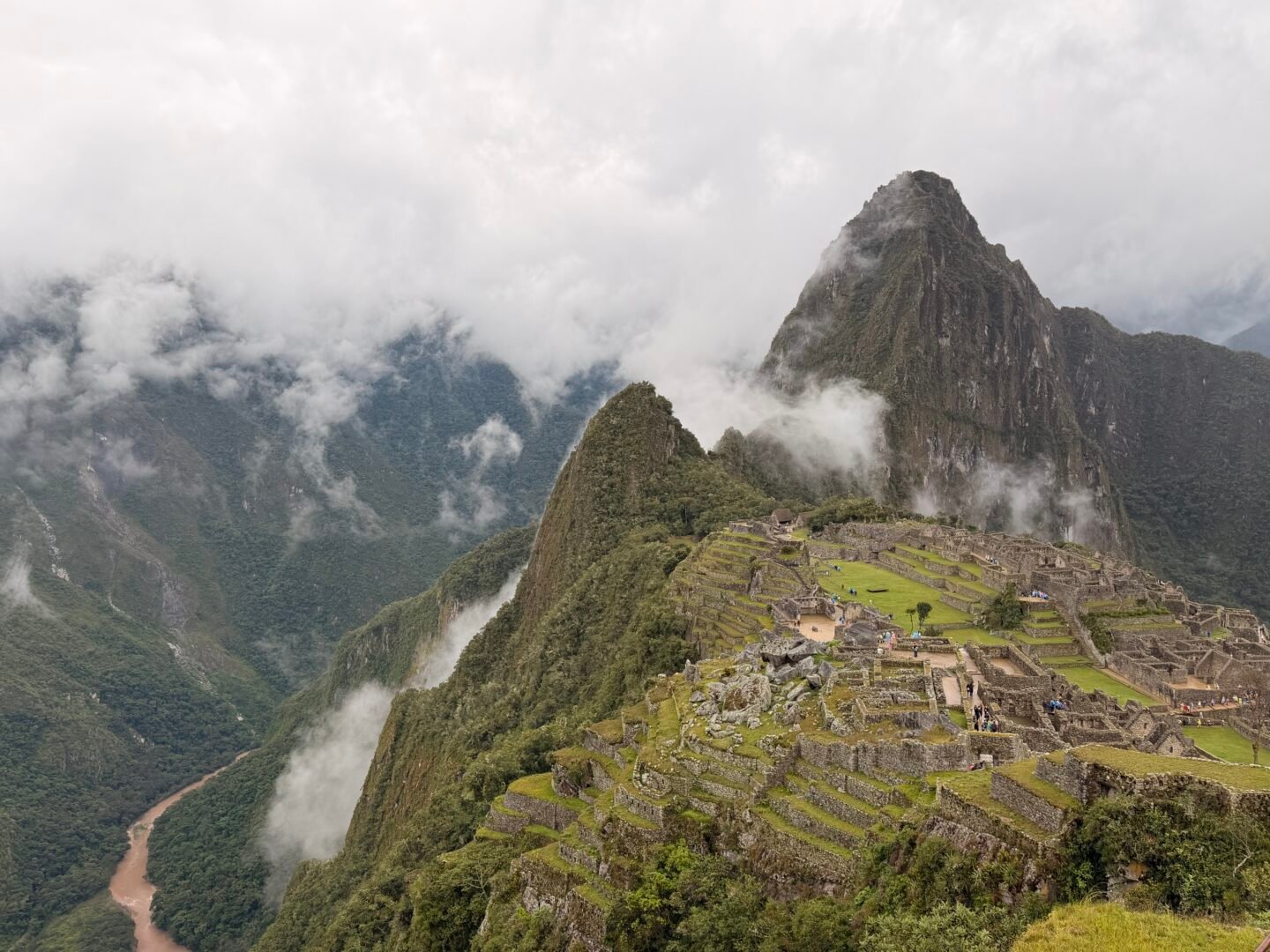
When Is the Rainy Season in Machu Picchu?
Machu Picchu has three main travel seasons:
- Peak Season: June–August
- Shoulder Season: April–May, September–October
- Rainy (Low) Season: November–March
November kicks off the beginning of both summer and the wet season with moderate rainfall. December through February represents the peak of rainy conditions, and March finally shows a gradual reduction in rain. The table below shows what we are dealing with as far as rain is concerned.
Machu Picchu Weather by Month
| Month | Rainfall (mm) | Rainy Days | Avg Temp |
| January | 138 | 15 | 24°C / 75°F |
| February | 141 | 20 | 25°C / 77°F |
| March | 151 | 13 | 25°C / 77°F |
| June | 17 | 2 | 9°C / 48°F |
| August | 24 | 3 | 10°C / 50°F |
I’ve done my fair amount of off/rainy season travel around the world. I usually am very lucky and only experience rare and occasional showers, but during this trip, my luck ran out. Rainy season is no joke in Peru. The rain comes down for hours at a time, varying from light sprinkles to heavy downpours.
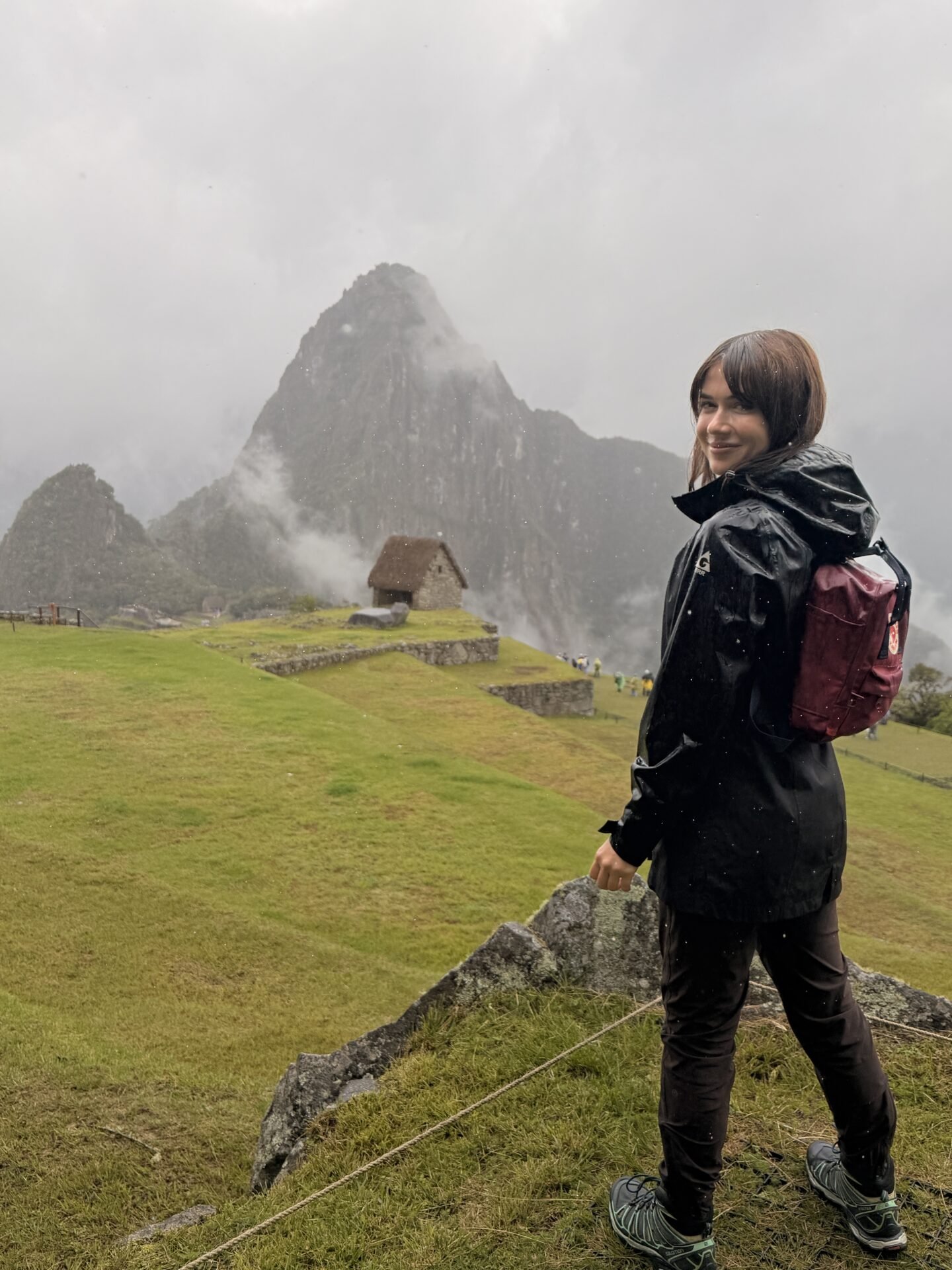
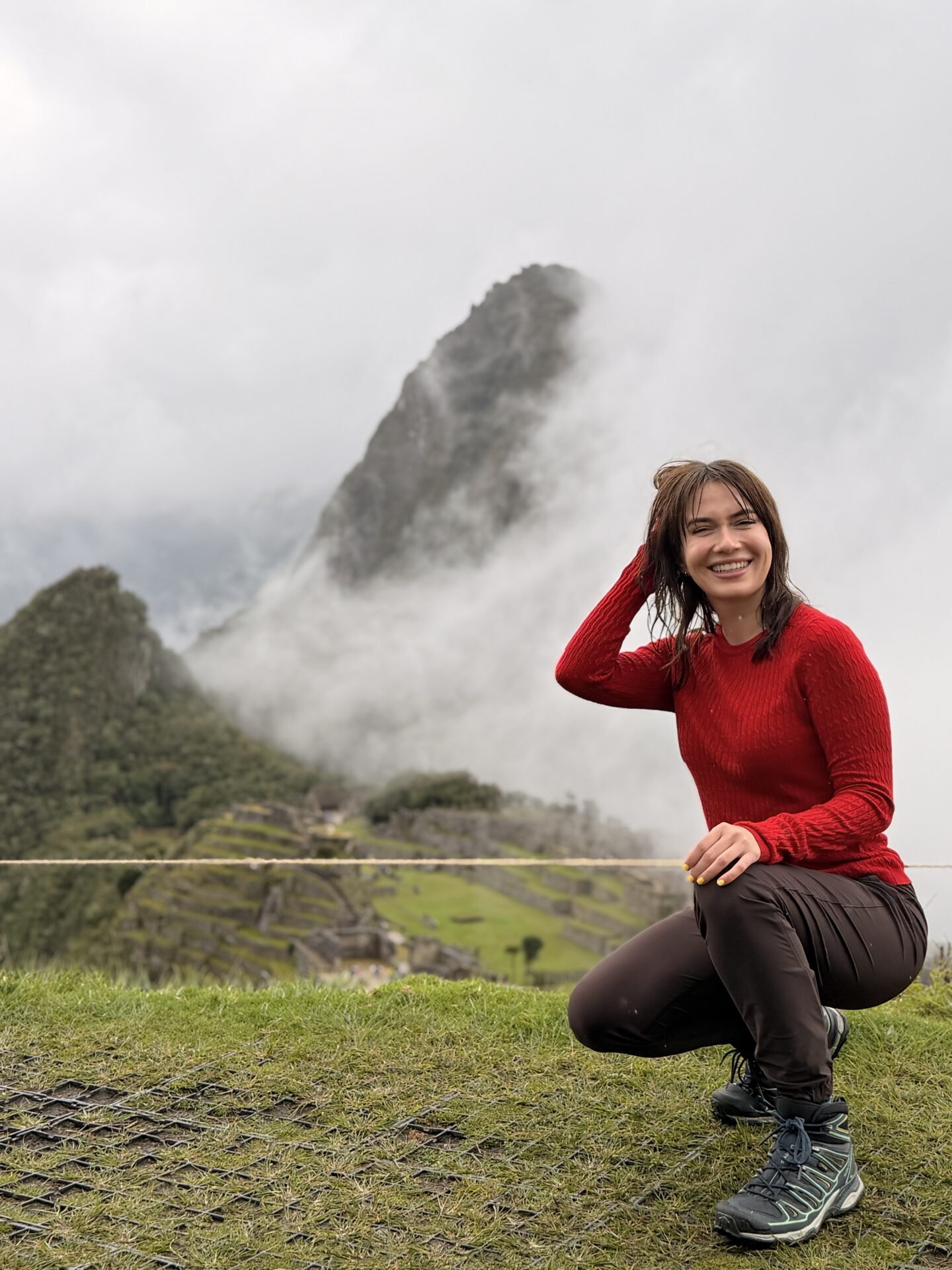
That being said, it’s a warm rain. Highs hover around 71°F (21°C), and when the sun comes out, things begin to warm up instantly.
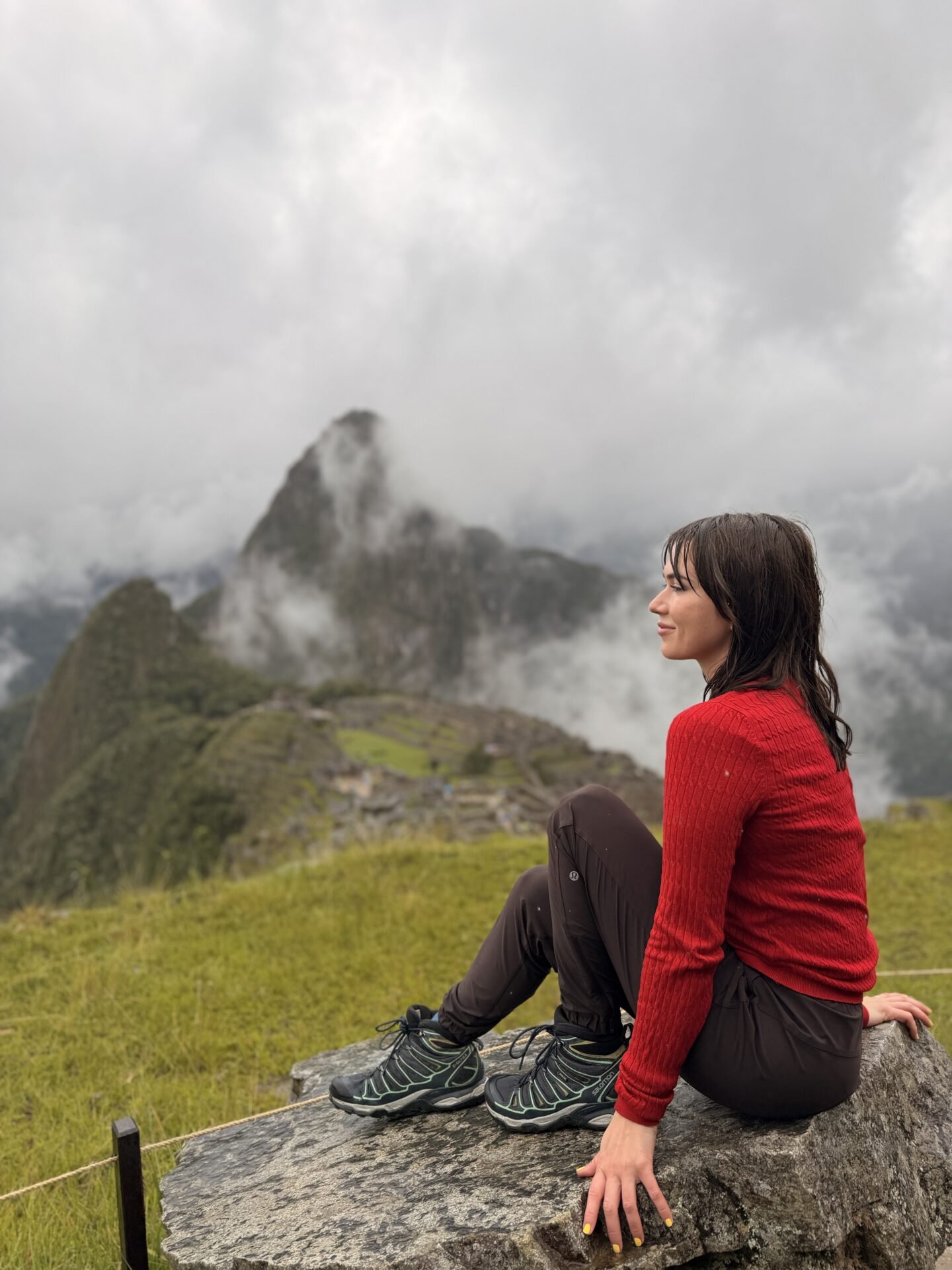
On our visit, it rained from Aguas Calientes through most of our first circuit and into the second. Then—out of nowhere—the sun appeared and dried everything: our clothes, hair, and the ground, like the rain had never happened. I was even starting to overheat in the sweater that I was wearing.
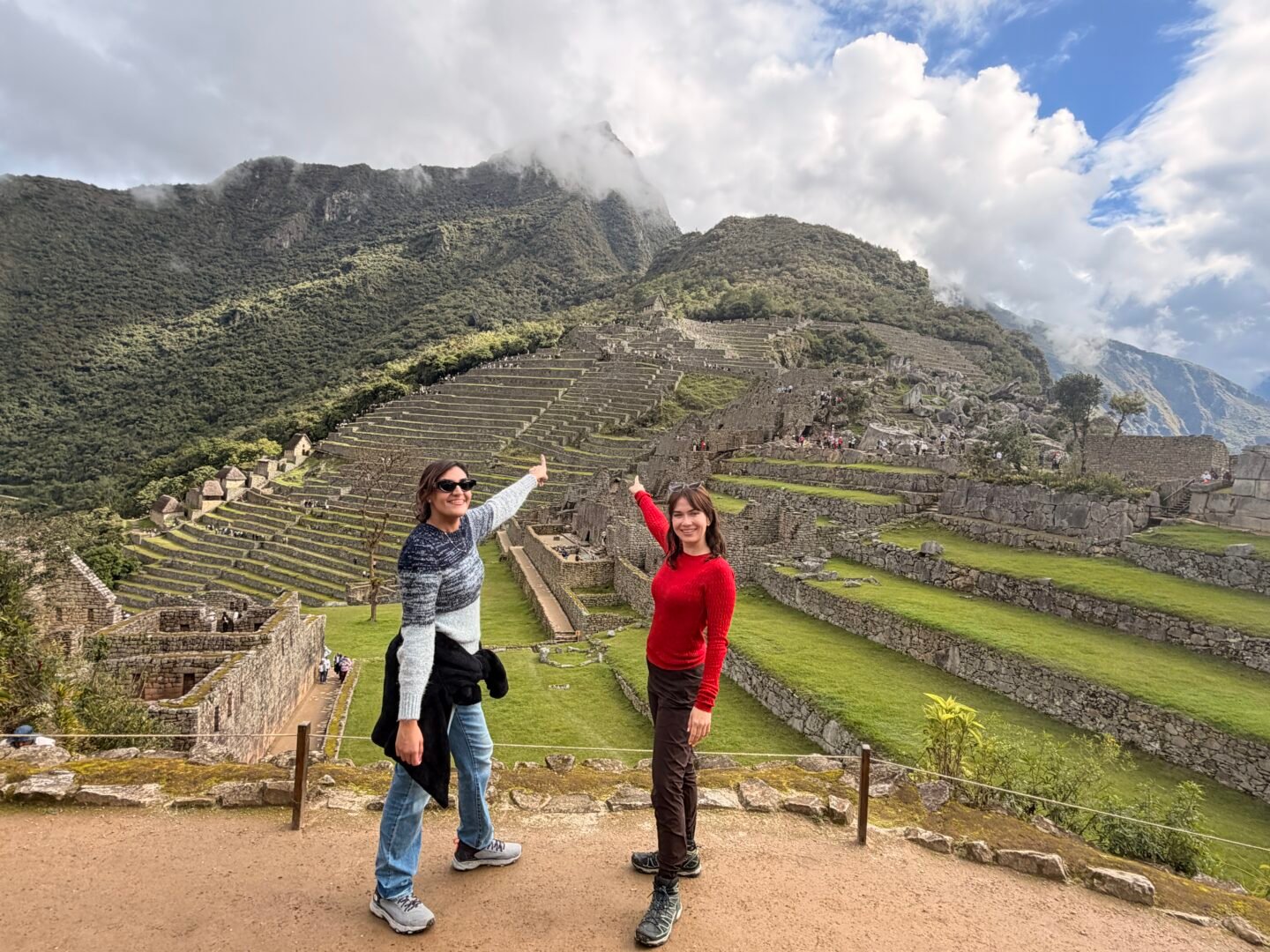
That unpredictability is exactly why planning matters.
Getting to Machu Picchu During the Rainy Season
There are two main ways to reach Machu Picchu:
1. Hiking the Inca Trail
The iconic 4-day trek is far less ideal during the rainy season. The Inca Trail is closed every February for maintenance and safety due to the heavy rains.
If hiking the Inca Trail is your dream, wait for shoulder or peak season.
2. Taking the Train (What We Did)
Due to time constraints, we took the train.
The journey looks like this:
- Early morning departure from Cusco (often around 4am)
- 2-hour bus drive to Ollantaytambo where the train station is located
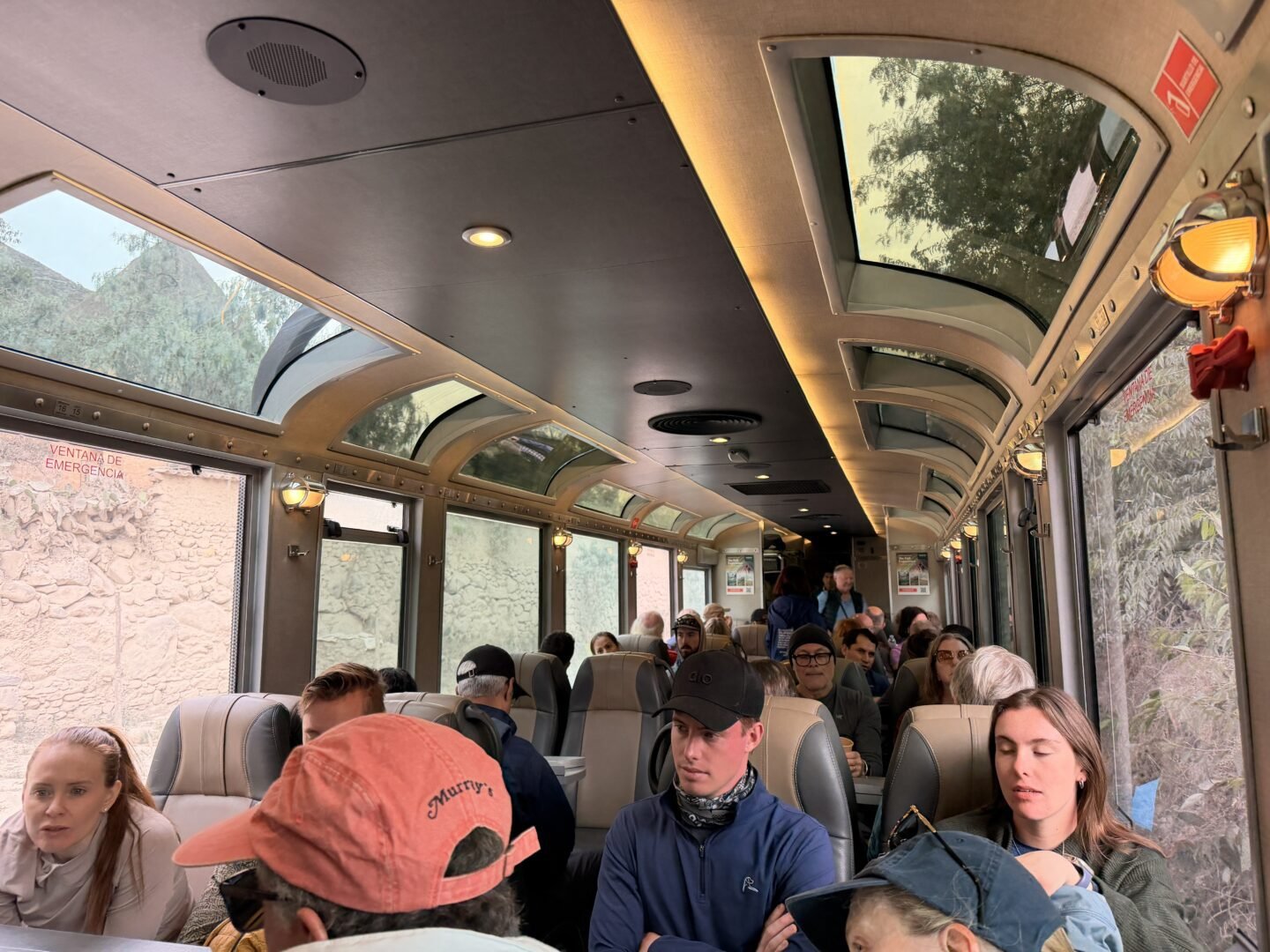
- 2-hour scenic train ride along the river to the town of Aguas Calientes
- 30-minute bus ride up to Machu Picchu
There are no roads to Aguas Calientes. The only way in or out is by train, and only two companies operate on a single shared track: Inca Rail and Peru Rail.
We booked an all-inclusive package through Inca Rail, customized via their online chat—including train class, bus tickets, entry tickets for multiple circuits, and English-speaking guides—which made logistics far easier.
Getting Stranded (Yes, It Happened)
On December 30th, a railway crash between Inca Rail and Peru Rail shut down all services indefinitely. We ended up stranded overnight in Aguas Calientes along with nearly 4,000 other visitors that day.
We learned that, technically, there is a third way out—hiking 10km along train tracks to reach the first road. Not recommended unless it’s an emergency. We were waited to be evacuated the next day instead.
Machu Picchu Circuits Explained (Rainy Season vs Peak Season)
There is no single Machu Picchu ticket. Instead, you choose from multiple circuits with set entry times.
I booked our Machu Picchu tickets before booking accommodations—highly recommended, even in the rainy season, in case you have to shuffle your itinerary around. Around the holidays, tickets still sell out fast. We visited the day before New Year’s Eve and snagged the last two tickets despite booking nearly two months in advance.
| Rainy Season Circuits (Available Year-Round) | |||||
| Ticket | Circuit | Difficulty | Approx. duration. | Attractions | Availability |
| Machu Picchu with Mountain (Route 1A) | Circuit 1 (Panoramic Route) | Average | 5 – 6 hours | Ascending Machu Picchu, panoramic views and a classic photo from Casa del Guardian | All year |
| Machu Picchu Classic Photo or Upper Terrace (Route 1B) | Circuit 1 (Panoramic Route) | Low | 2 – 3 hours | Panoramic views and classic photo from Casa del Guardian | All year |
| Machu Picchu Classic Designed (Route 2A) | Circuit 2 (Classic Route) | Low | 2 – 3 hours | Historical tour of the main temples and buildings of the Inca citadel | All year |
| Machu Picchu Classic Lower Terrace (Route 2B) | Circuit 2 (Classic Route) | Low | 2 – 3 hours | Historical tour of the main temples and buildings of the Inca citadel | All year |
| Machu Picchu with Huayna Picchu (Route 3A) | Circuit 3 (Royal Route) | High | 5 – 6 hours | Ascent to Huayna Picchu mountain and a tour of the lower part of the Inca citadel | All year |
| Machu Picchu Temples Lower Part or Designed Royalty (Route 3B) | Circuit 3 (Royal Route) | Low | 3 hours | Tour of the lower part of the Inca citadel | All year |
During peak season (June 19th to November 2nd), four new routes are added to diversify the experiences and better preserve each one– Inti Punku or Sun Gate (route 1C) Inca Bridge (route 1D), Great Cave or Temple of the Moon (route 3C) and Huchuy Picchu mountain (route 3D).
The peak season circuits are also available for a limited time around the New Year on December 30th and 31st.
What We Did (And Why It Was the Perfect Combo)
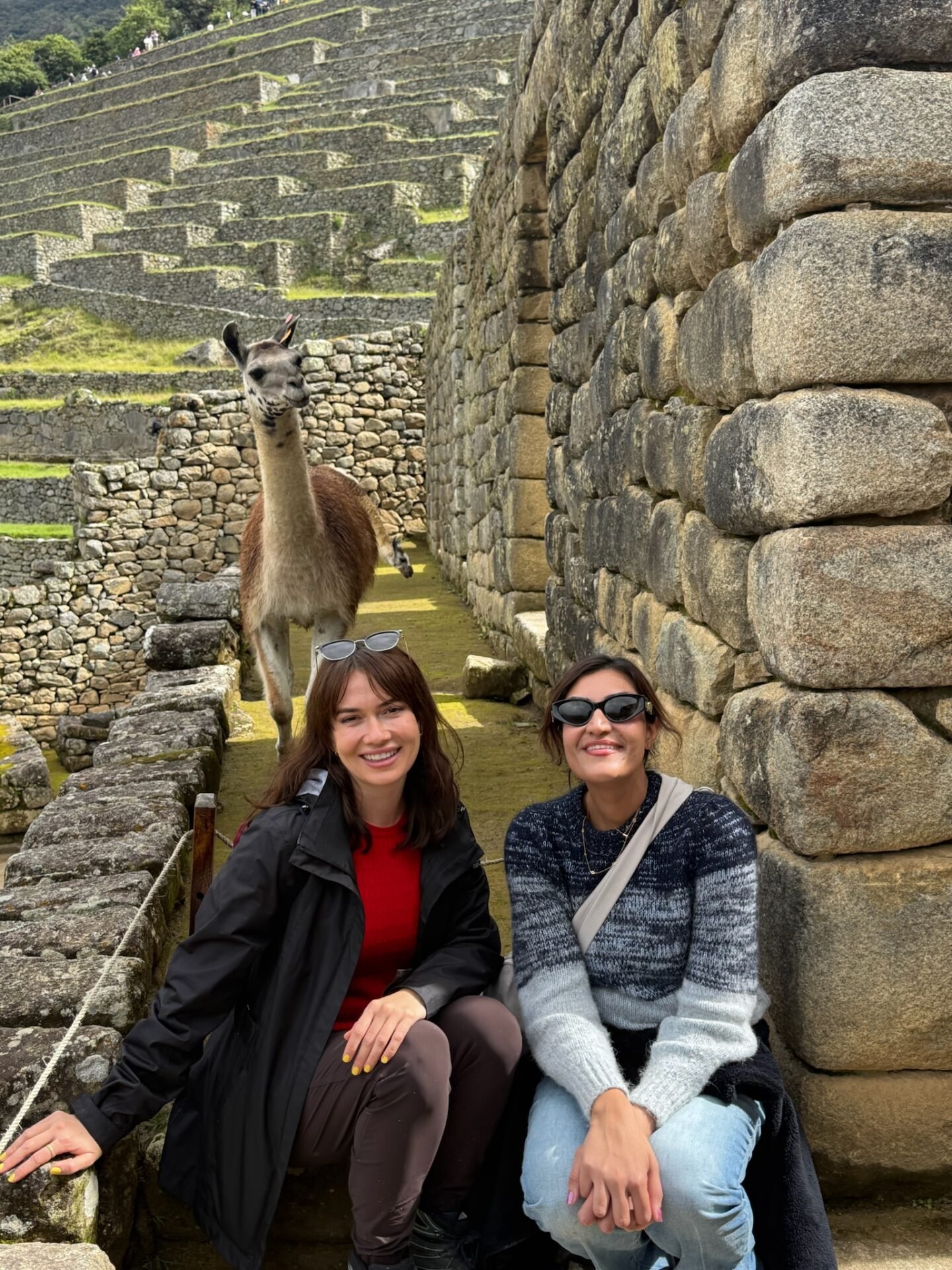
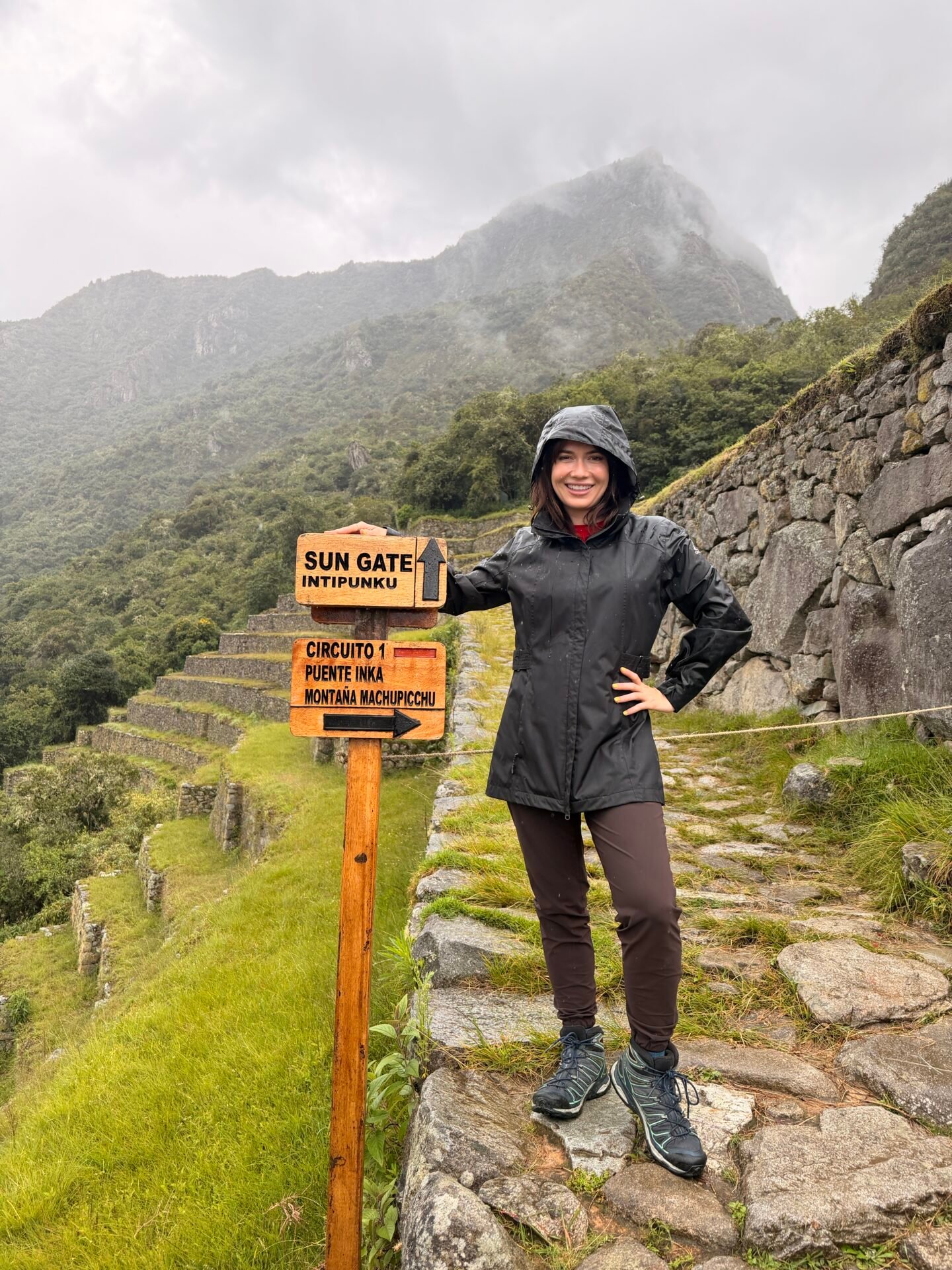
We combined Circuit 1C (panoramic views) with Circuit 3B (lower citadel). This gave us:
- Iconic postcard views from above
- An on-the-ground walk through temples with a deep dive into its history
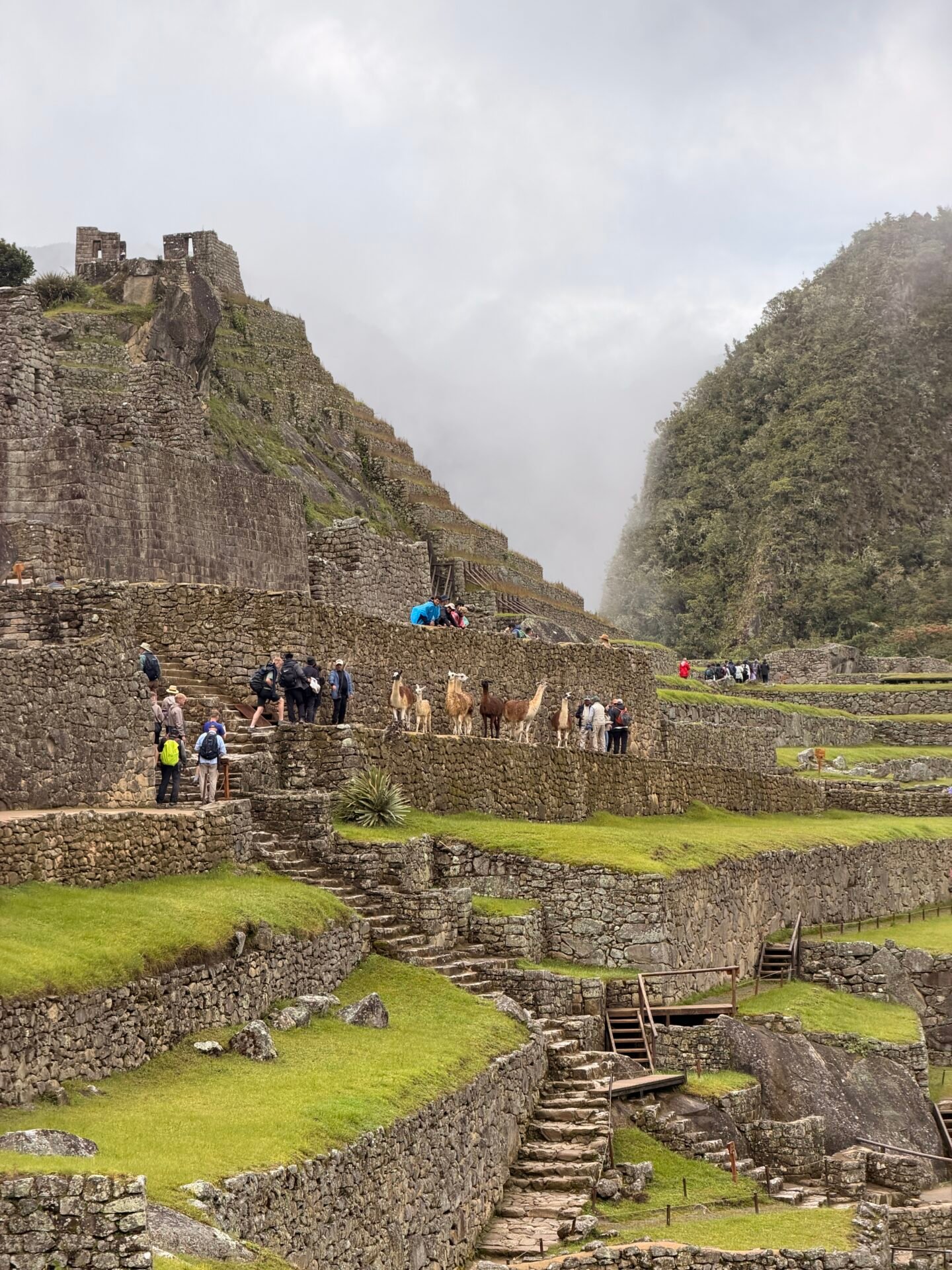
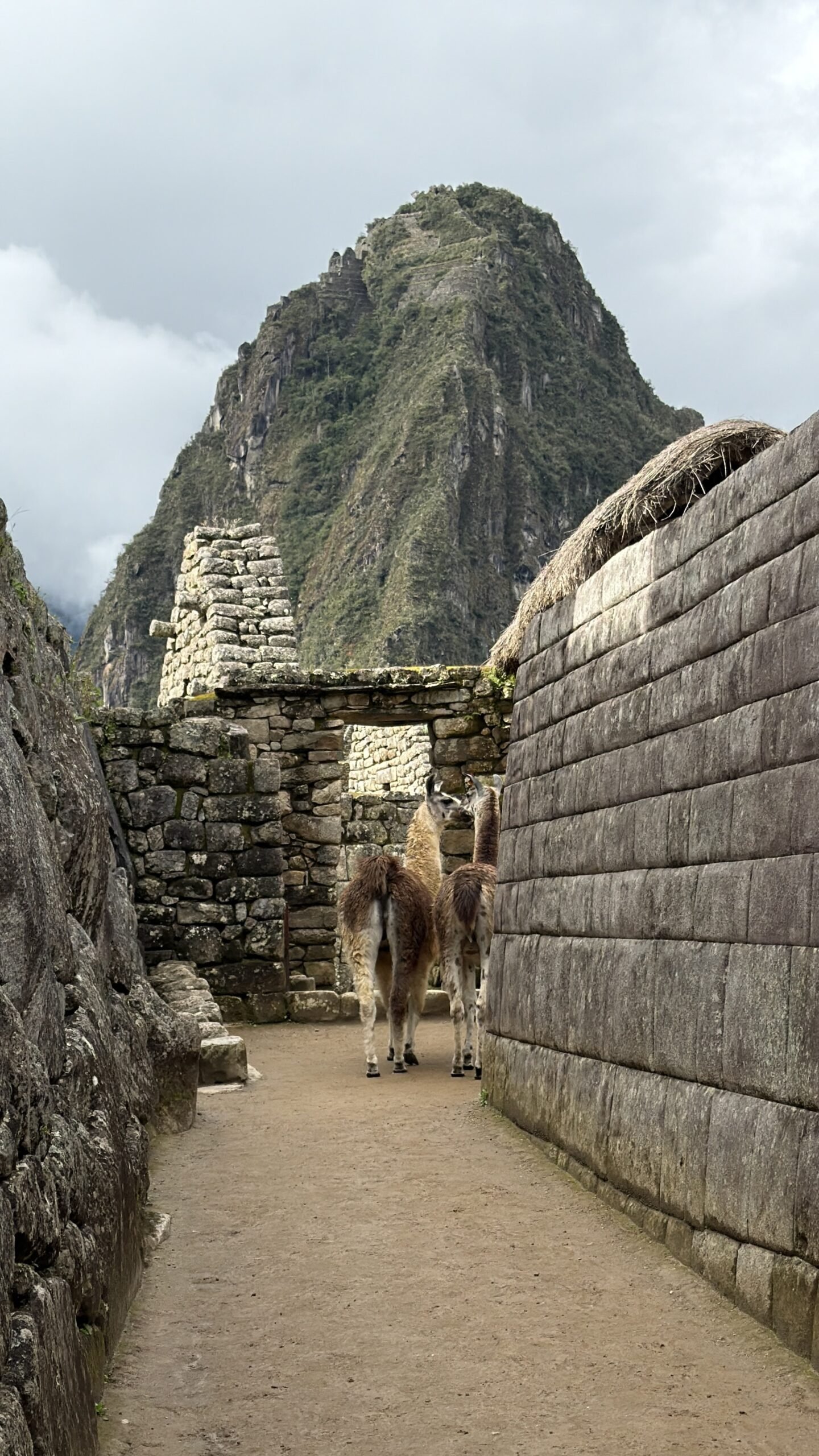
- Llama encounters
- A much more complete understanding of the site
Choosing circuit is based on personal preference, though I recommend trying to several for the best experience. You can easily do two in a single day. However, if it’s within your time frame, I strongly recommend splitting circuits across two days and staying overnight in Aguas Calientes. Mist can roll in and stick around all day—and some people hike for days only to see Machu Picchu hidden behind clouds the entire time. Splitting the circuits across two days means you have a greater chance of one of those days having good weather, as well as more time to absorb the experience.
What to Wear to Machu Picchu in the Rainy Season
Raincoat (Non-Negotiable)
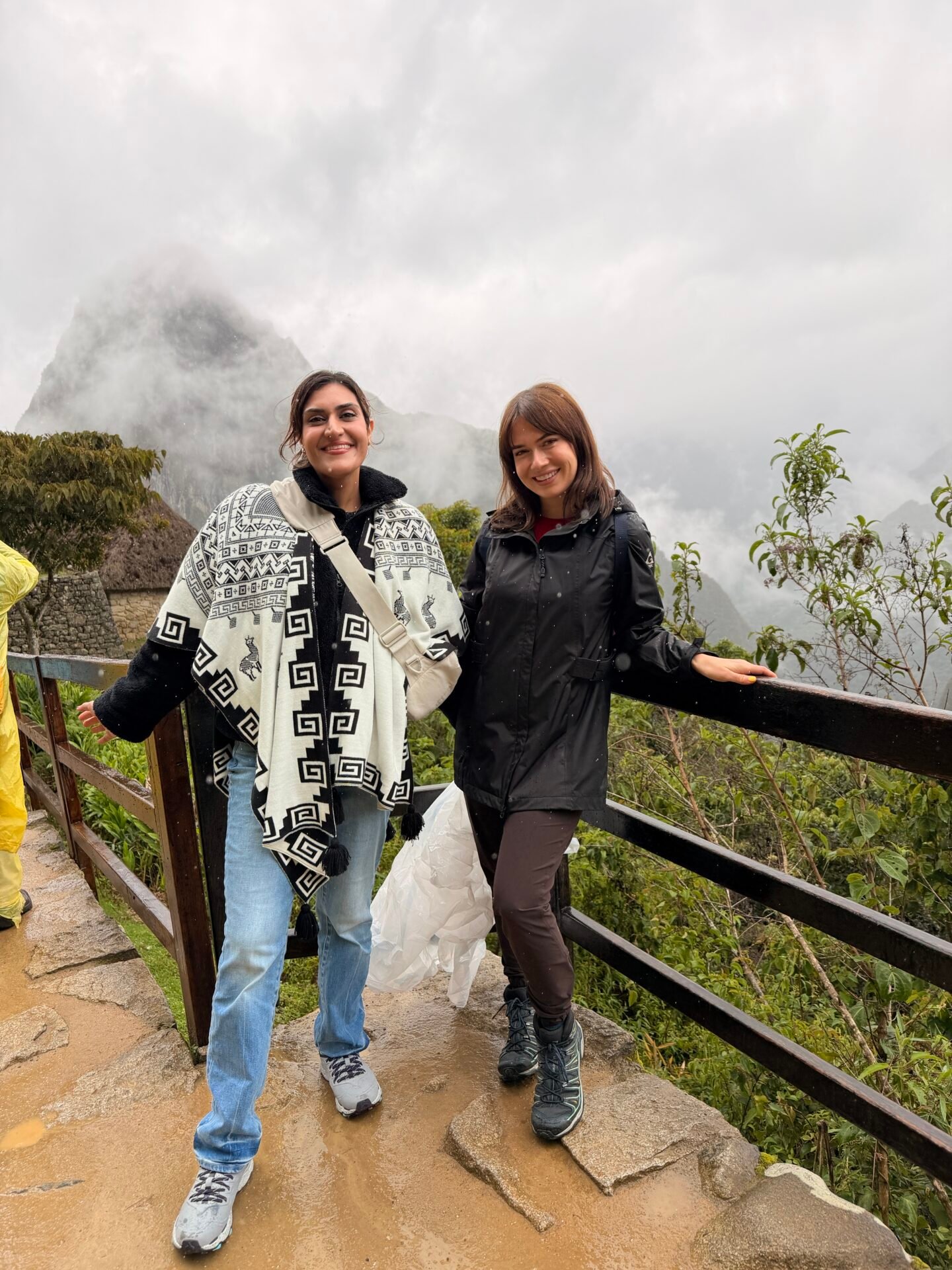
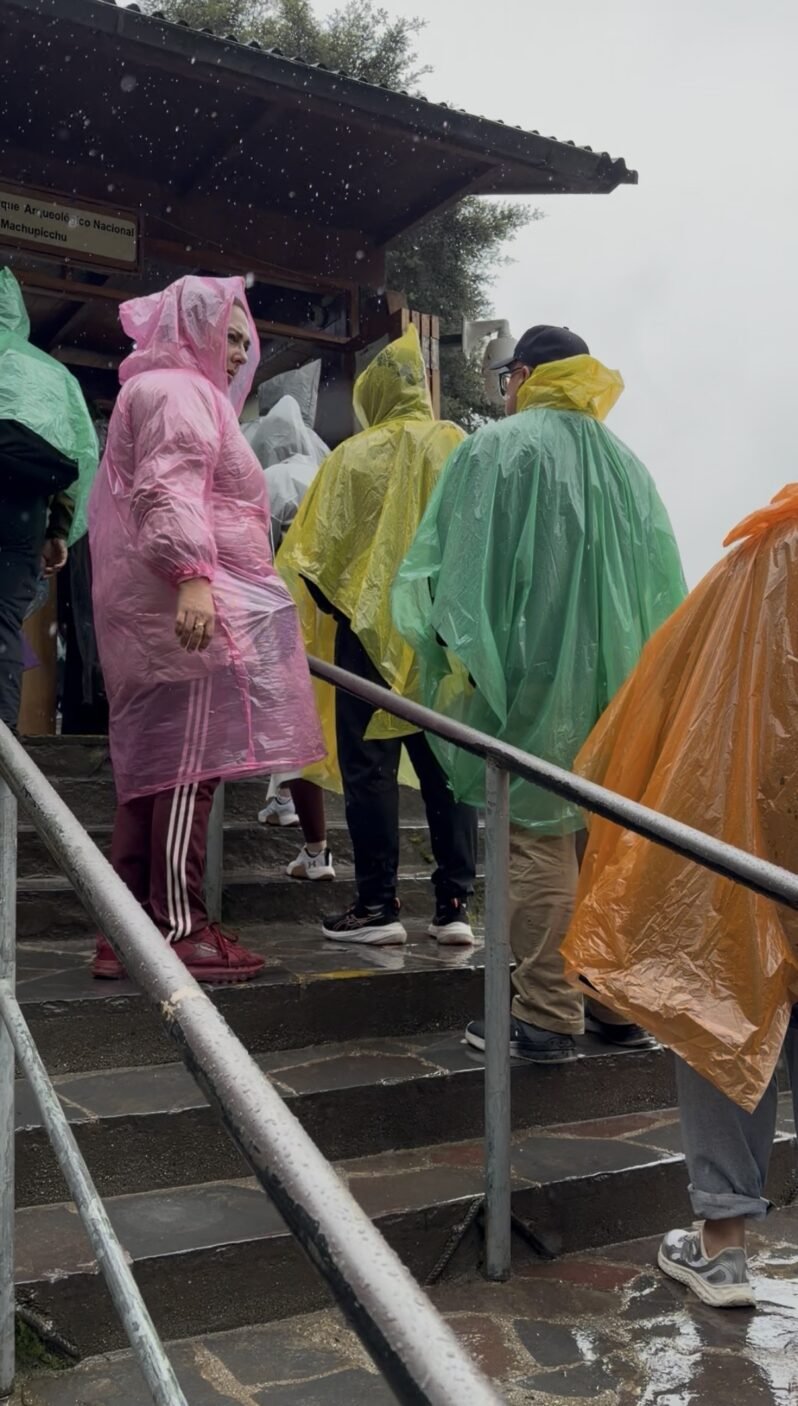
I’m going to shout this one loudly so the people in the back can hear: WEAR A PROPER RAINCOAT! The weather can and will change in a heartbeat. You don’t want to be stuck in a cheap, plastic, colorful, garbage bag-quality poncho they sell at the entrance to unprepared tourists.
A raincoat with a hood will make your life so much easier, plus it will likely have waterproof pockets for easy (yet secure) access to your phone for photos. I did say screw it after a while and took mine off for some fun photos in the rain, but it was worth it for the ‘Gram.
Hiking Boots
Waterproof hiking boots are essential. Wet, slippery stone steps, mud, and uneven terrain are everywhere. My friend nearly wore her everyday sneakers until I talked her out of it—and I teased her about it at every single puddle we encountered.
Layers
When the sun comes out, it gets warm fast. Breathable layers you can remove and stuff into a small backpack are key.
What to Pack for Machu Picchu
You’re limited to a 16 x 14 x 8 inch (roughly 20L) backpack inside Machu Picchu. My Camelbak Helena 22 was slightly over, so I packed a smaller Fjällräven backpack inside it like Russian nesting dolls to be safe.
There’s a bag check at the entrance next to the restrooms where you can pay just 5 soles ($1.50 USD) per bag for the day.
According to my guide, my backpack was close enough to where I could have easily taken it in. I still ended up checking it and just taking my smaller bag which was much lighter. Once inside the Citadel, you don’t need much and it’s better to not be weighed down, especially in the rain.
In my bigger backpack, I kept things I might need later like nausea medicine for the drive and a change of clothes and socks because of the rain. I also bought I baby alpaca poncho in Aguas Calientes before the bus ride up to Machu Picchu, so it was nice to be able to leave it in bag check. I originally was planning on wearing it, but the weather was not on my side either being too rainy and later on too warm.
Inside Machu Picchu (Small Backpack)
- Passport (required)
- Entry tickets
- Cash (toilets, tips, souvenirs, bag storage)
- Water bottle
- Sunscreen (yes, you can get sunburned even on a cloudy day, especially at high altitudes!)
- Phone + camera
- Battery pack
- Ziplock bags (to keep electronics & passport dry)
- Charging port protection plug (I’ve discovered the hard way in the past that if water gets into you phone charging port, you won’t be able to charge it for hours to up to a day. These cheap little plugs are extra insurance against any water or dirt getting in there.)
Extra Items (Larger Backpack)
- Change of clothes & socks. (In case the sun doesn’t come out, you don’t want to spend the 4 hour trip back to Cusco in wet clothes.)
- Medications (pack for 24+ hours—emergencies happen)
- Snacks. While you can’t bring food into Machu Picchu, protein bars and snack are really useful before and after your circuits and on the train and buses.
- Phone charger cord and plug (When we were stranded overnight, a bartender saved us by lending us one to charge our phones in the bar.)
- Headphones (long train + bus rides)
What You Don’t Need
- Selfie sticks (banned)
- Umbrellas (also banned)
- Tripods (you guessed it–banned)
For a comprehensive list of all prohibited items and behaviors, check out Peru’s Ministry of Culture’s website.
Do You Need a Guide at Machu Picchu?
Officially, yes. In reality, enforcement is inconsistent. Many people claim they had no issues entering without a guide.
That said—get a guide.
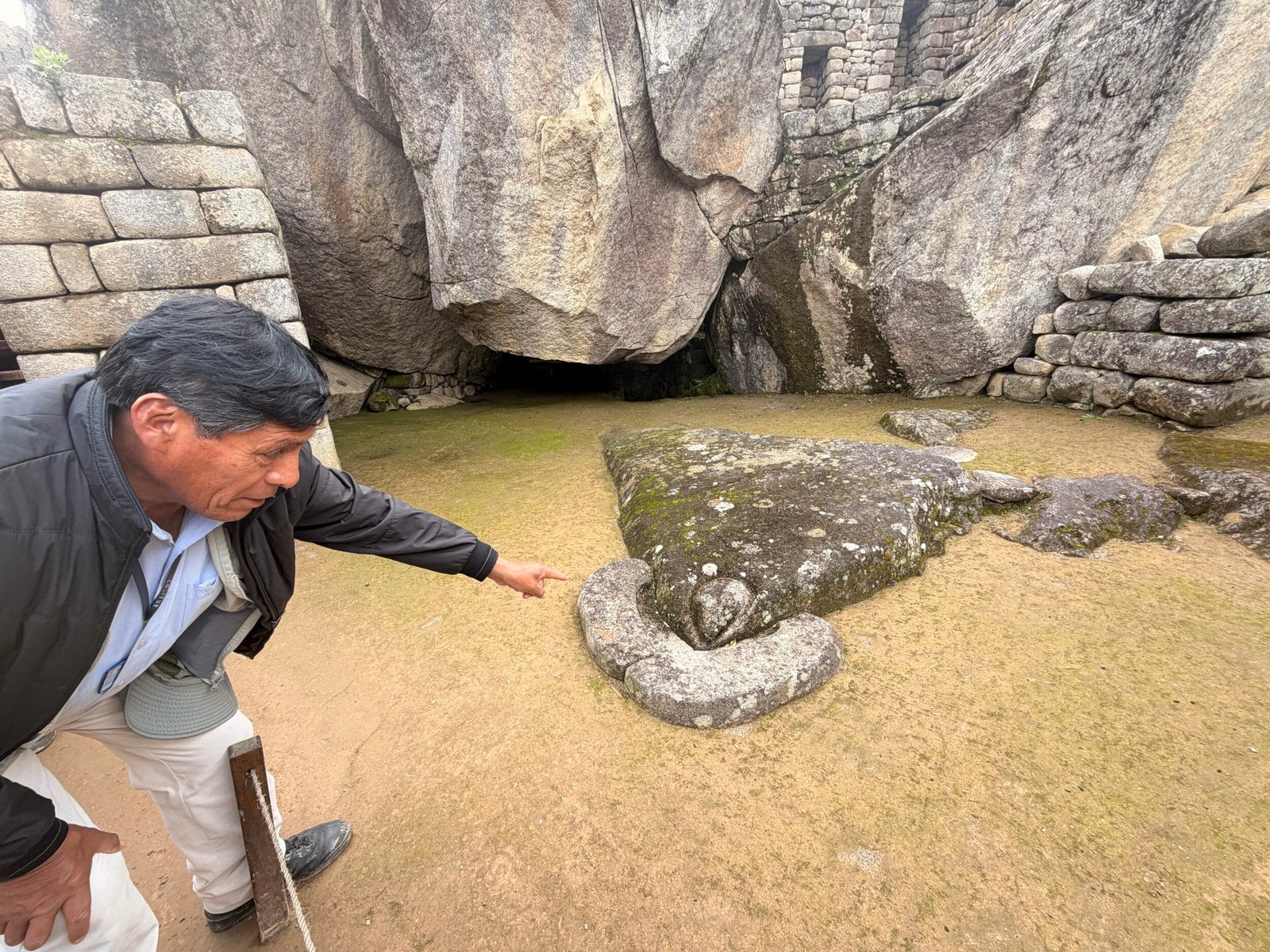
We booked ours through Inca Rail, and it made all the difference. Not only did they explain what we were actually looking at and provide so much in-depth information, but they also helped us capture incredible photos and videos.
Best rainy season perk?
Both of our “group tours” turned into private tours. Just us and the guide. This is far more likely during the rainy season than peak season.
Why Visiting Machu Picchu in the Rainy Season Is Worth It
Fewer Crowds
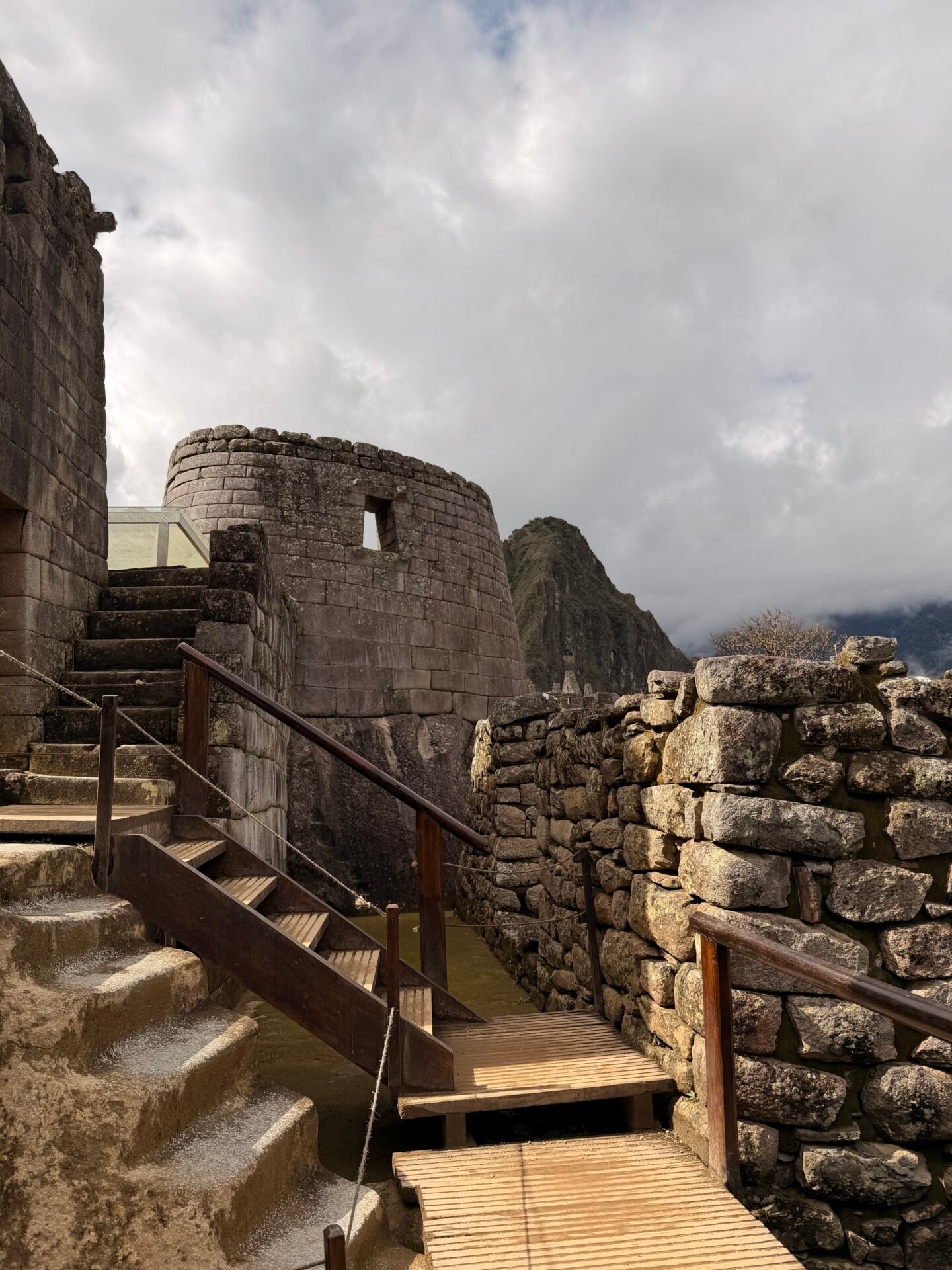
While some areas still bottleneck, there were stretches where we felt completely alone. Fewer people means better photos and a more intimate experience.
Even More Magical Views
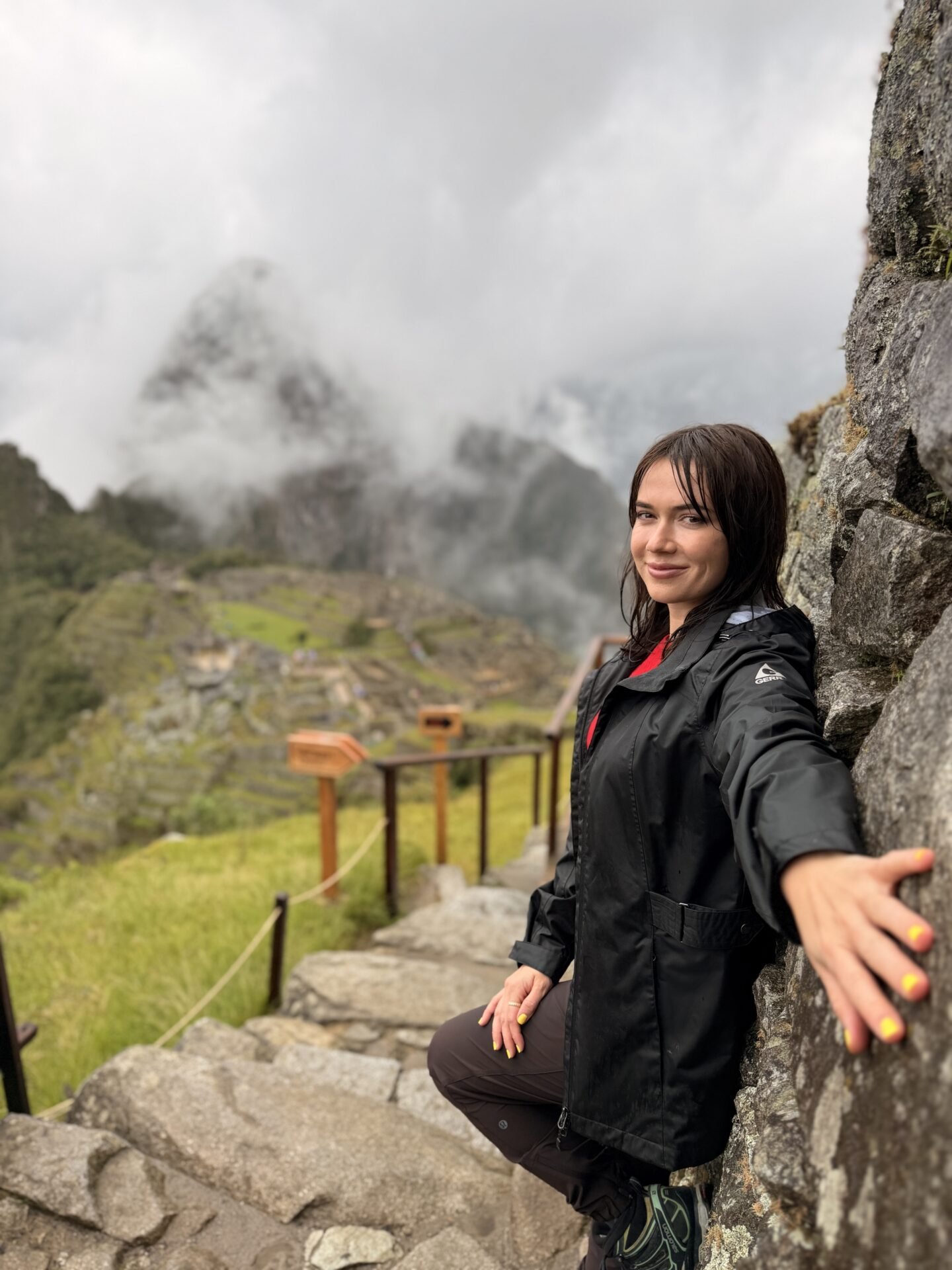
The mist swirling around the citadel, vibrant green mountains, and fresh jungle air felt surreal. Something about the rain makes everything pop more.
Lower Prices
I visited during the holidays, so prices weren’t at their lowest—but outside of peak dates, rainy season usually means cheaper hotels and tours.
Warmer Temperatures
It may be wet, but it’s warm. Compared to the chilly mornings of peak season, where it dips to 33 degrees Fahrenheit, rainy season is far more comfortable.
Final Verdict: Is Machu Picchu Worth Visiting During the Rainy Season?
Yes—with realistic expectations and proper preparation.
If you dream of perfectly clear skies all day, the rainy season may test your patience. But if you’re open to dramatic misty backdrops, fewer crowds, and warmer weather—Machu Picchu in the rainy season can be unforgettable. When the sun finally breaks through after hours of rain, it feels like you earned it.